
Cargo Insurance, Demurrage & Arrival Documents for Charcoal Imports
The parts of a charcoal shipment buyers forget until they hurt — cargo insurance, demurrage and detention, and the documents you need at the destination port.
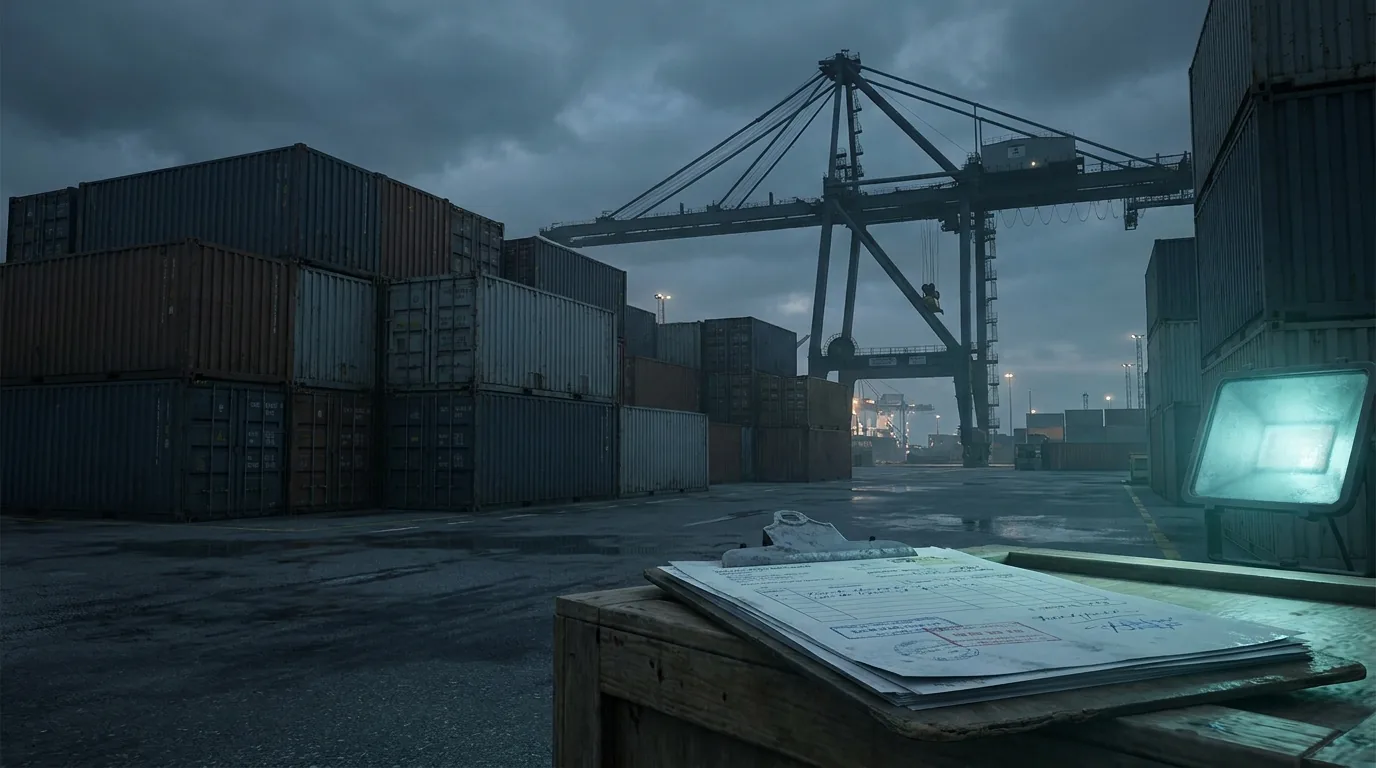
Most import guides stop at “the container ships.” The costs that surprise first-time buyers happen after that — at sea and at the destination port. Here is what to plan for.
Cargo insurance: who carries the risk
Under FOB, risk passes to you once the goods are loaded at the origin port — so the sea leg is on you. A marine cargo policy covers loss or damage in transit for a small percentage of cargo value. It is cheap relative to a lost container, and worth arranging before the vessel sails. Under CIF, the seller arranges insurance to the destination port; under CFR, freight is covered but insurance is not — read the term, don’t assume.
Demurrage and detention: the clock at the port
Two charges catch importers off guard:
- Demurrage — the port charges you for a container sitting in the terminal beyond the free days while it waits to be cleared and collected.
- Detention — the shipping line charges you for keeping its container (off-terminal) beyond the free period before you return it empty.
Both accrue per day, per container. The defence is simple: have your customs broker and paperwork ready before the vessel arrives, and collect promptly.
Documents you receive
After shipment we provide the core set every broker needs:
- Bill of lading — title to the goods.
- Commercial invoice — value for customs.
- Packing list — contents and weights.
For EAEU markets you will also need EAC certification and a Certificate of Origin. Where the route requires it, SHT (self-heating) and VWT (vanning weather) tests are carried out by third-party inspectors — arrange these early so they don’t hold up loading.
A short pre-arrival checklist
- Cargo insurance arranged for the sea leg (under FOB).
- Customs broker briefed, HS code confirmed.
- Bill of lading, invoice, packing list in hand.
- EAC / Certificate of Origin ready for EAEU.
- Collection booked to avoid demurrage and detention.
Get these lined up before the ship docks and the expensive surprises disappear.
We are IZZY COCO — coconut charcoal produced at our own factory in Indonesia: a consistent 1.8–2.0% ash, ISO 9001, lab-tested, and shipped factory-direct by the container (or pallet within Europe). To review specifications or request a sample, ask us for pricing →
Request a Quote
For a current price on coconut charcoal briquettes, message us on WhatsApp.
WhatsApp