
How to Test a Coconut Charcoal Sample: A Buyer's Checklist
Got a sample? Here's how to test coconut charcoal like a pro — ignition time, burn time, ash colour and amount, smell, and the drop test.
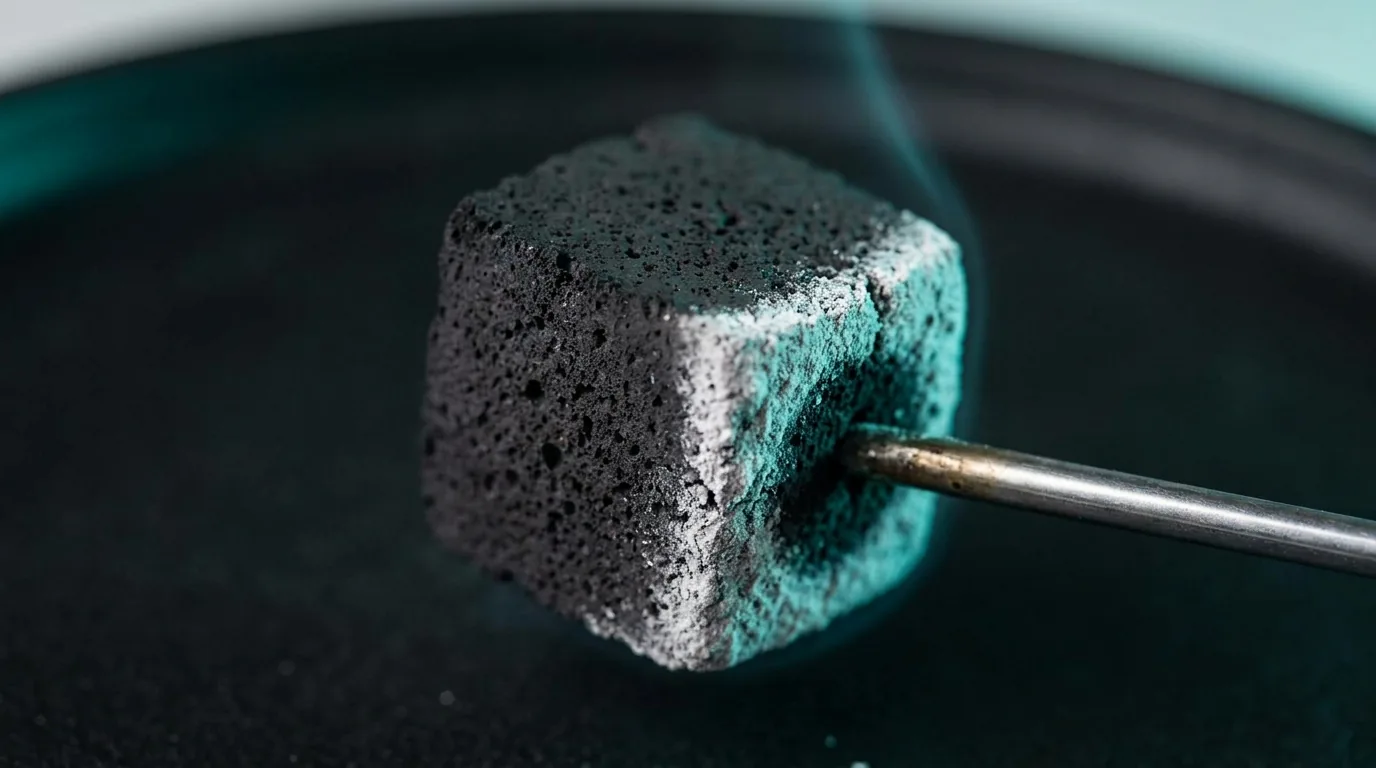
A spec sheet tells you what a supplier claims. A sample tells you what they actually ship. Before you commit to an MOQ of 19 tonnes, an hour of structured testing on a few cubes will tell you more than any label.
Why test the sample instead of trusting the label
Datasheets are easy to write and hard to verify. Two suppliers can both print “premium 2% ash” while shipping very different products. A physical test removes the guesswork: you light the charcoal, you watch it burn, and you judge it the way your customers will. Treat the sample as the contract you are really buying against.
Ignition time
Place a cube on a standard electric burner and time it. Good coconut shell charcoal lights through evenly in around nine minutes, with the glow spreading across the whole surface rather than staying in one corner. Much longer than that points to high moisture or dense, poorly carbonised shell. Note that moisture should sit near 5%.
Burn time
Once lit, time how long the cube holds usable heat in a session. Quality cubes burn for two hours or more on a single load, which means fewer changes and less interruption for the end user. Short burn time is the most common complaint that reaches lounge owners, so test this carefully.
Ash colour and amount
When the cube is spent, look at what is left. The ash should be a natural white, light and powdery, and there should be very little of it. On our charcoal the ash content runs a consistent 1.8–2.0%. Grey, dark or heavy ash signals filler, bark content or chemical additives, and it tells you the bowl will need cleaning far too often.
The smell test
Smell the charcoal cold, then smell it again while it ignites. Pure coconut shell charcoal is effectively odourless and gives off no chemical or petroleum smell when lighting. Any sharp or solvent-like odour means binders or accelerants, which will carry into the smoke and into customer complaints.
The drop test
Drop a cube from roughly waist height onto a hard surface. Well-made cubes survive intact — in our own drop testing the result is 0/10, meaning no breakage across the batch. Cubes that crack or crumble will arrive as dust and broken pieces after a long sea journey, and broken stock is unsellable.
Consistency across cubes
Do not judge on a single cube. Test several from the sample and compare. Dimensions, weight, ignition and burn time should be near-identical from one to the next. Consistency is what separates a factory with real quality control from a trader repacking mixed stock, and it is what protects you on a full container.
How to request a sample
Ask the supplier for samples before any large order. We send free samples of up to 5 kg; the buyer covers the courier (DHL or UPS). That is enough to run every test above several times and to put cubes in front of your own customers before you commit.