
How to Choose a Coconut Charcoal Supplier: A Wholesale Buyer's Guide
Buying coconut charcoal in bulk? Here's how distributors and brands evaluate a supplier — ash, consistency, paperwork, MOQ, and the red flags worth walking away from.
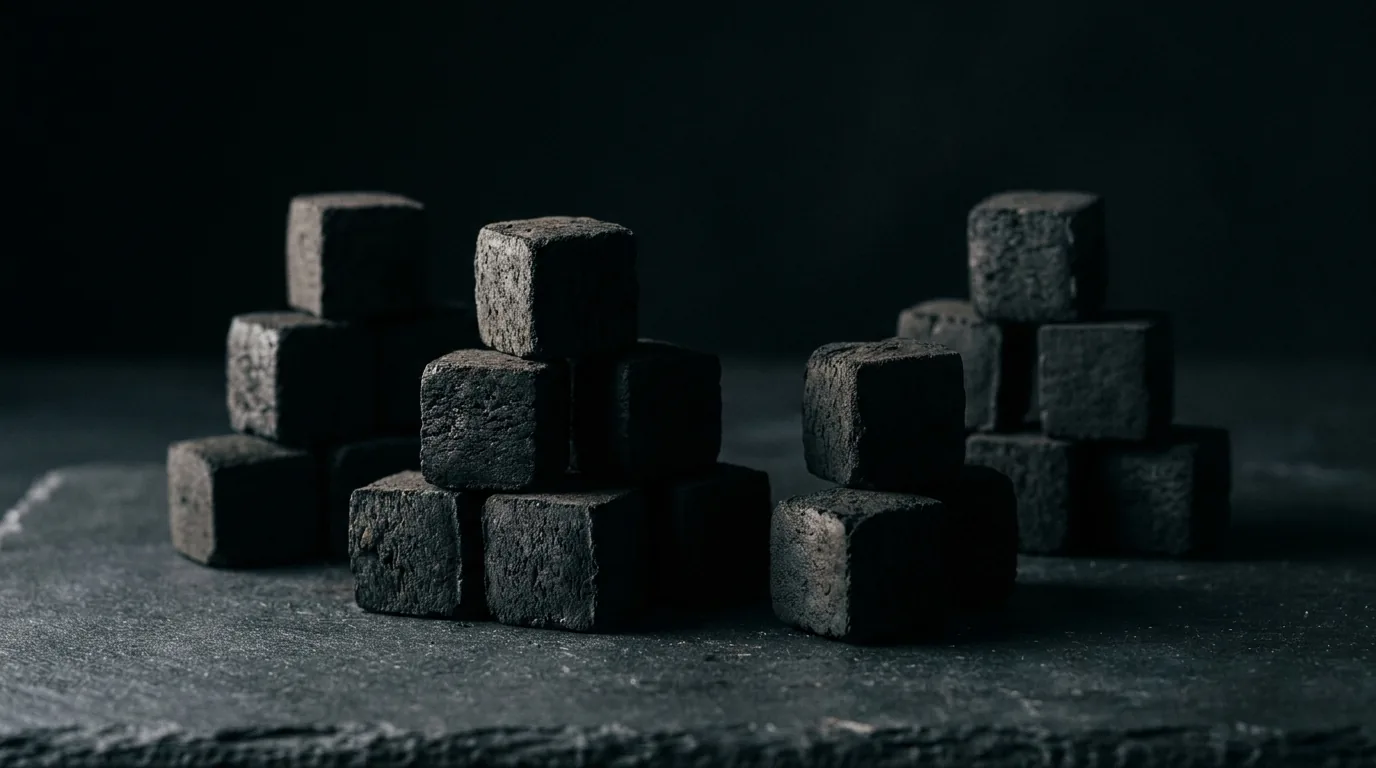
Many buyers choose a charcoal supplier on price alone — and then spend the next six months dealing with the consequences.
We are IZZY COCO — we produce coconut charcoal at our own ISO 9001:2015 factory in Tangerang, Indonesia, test every batch in an independent laboratory and ship it factory-direct by the container. This guide is written from the supplier’s side of the table: the questions below are the ones serious importers ask us before a first order, and the ones we would ask in their place.
It is an easy mistake to make. Charcoal looks like a commodity until it is burning in front of your customer, at which point it becomes the one product they judge every session. Too much ash, a cube that cracks, a slow light — and the complaint does not reach the factory in Indonesia. It reaches you. So it is worth taking the time to evaluate a supplier properly before committing to a first container.
Here is what genuinely separates a supplier worth keeping from one you will eventually replace.
Start with ash content — and ask them to prove it
Ash is the figure that predicts complaints. Premium coconut shell charcoal burns at around 1.8–2.0% ash; once you pass roughly 2.5%, customers will see the grey residue on the tray and feel it in the session.
The difficulty is that “low ash” appears on every label. So rather than trust the label, ask for a recent lab report with the actual tested figure. A serious supplier provides it without hesitation. A vague “typically around 2%,” with no figure on paper, should be treated as your answer.
Consistency is what matters most
A strong sample means little if batch number seven burns differently from batch number one. This is the real difference between buying from a brand that runs its own factory and buying from a trader who sources spot batches wherever they are cheapest in a given month. The brand has every reason to keep quality stable over years — its name is on the box, and yours sits right beside it.
Ask how long they have been producing, and whether the charcoal you sampled is the charcoal you will receive in twelve months.
Paperwork that won’t hold up your customs
Good charcoal with poor documentation still sits in port. Ask for these before the first container:
- ISO 9001 certificate for the factory that actually produces the charcoal (ours is ISO 9001:2015, Tangerang, Banten).
- Certificate of Analysis (COA) from an independent laboratory such as Beckjorindo or Carsurin, covering ash, moisture, fixed carbon, burn time, ignition time and a drop test for durability.
- Certificate of Origin — agree before the order that it ships with every container, not only on request.
- Bill of Lading, Commercial Invoice and Packing List showing the HS code. We declare coconut shell charcoal under 4402.90; some importers use 4402.20, so confirm the line with your customs broker.
- EAC exemption letter (otkaznoe pismo) if you sell into EAEU markets (Russia, Kazakhstan, Belarus, Armenia, Kyrgyzstan): hookah charcoal is outside the EAEU technical regulations, so this letter replaces the certificate.
Match the order to how you operate
Wholesale moves by the 20ft container — approximately 19 tonnes. If you are testing a new market, ask whether the supplier will start you on pallet quantities; within Europe this is usually workable, though for overseas routes the container is the only economical option. Confirm the Incoterms (FOB, CIF, CFR, DAP), the lead time — production takes about 10 days for a 20-ft container and 14 days for a 40-ft, printed packaging adds 2–3 weeks, and sea transit depends on your port (about 30–35 days from Jakarta to northern Europe) — the payment structure (50% on contract and 50% no later than five days before loading is the normal shape), and which documents you will receive.
Origin still matters
Indonesia is the premium origin for coconut shell charcoal, and this is more than marketing: the shells are dense and burn clean. There is a reason most of the serious shisha charcoal in the world traces back there.
Red flags worth noting
A supplier to avoid is usually clear within a single conversation. Walk away if you see any of these:
- No lab report — or a “typically around 2%” with no tested figure on paper.
- Cannot name the factory that produced the charcoal, or will not give its address.
- No sample before commitment — a serious producer sends one before any container is discussed.
- Pressure to pay in full upfront on a first order, instead of a deposit on contract and the balance before loading.
- A price far below the market reference (USD 2,000 per tonne FOB Jakarta for premium grade in 2026) with no explanation of which grade you are actually buying.
Any one of these is reason enough to look elsewhere.
Supplier checklist
Use this table on the first call. The right-hand column is what premium-grade coconut charcoal looks like on paper — the specification IZZY COCO ships against.
| Check | What to ask for | Premium benchmark (IZZY COCO specification) |
|---|---|---|
| Ash content | Independent lab COA for a recent batch | 1.8–2.0%; above 2.5% expect complaints |
| Moisture | Figure on the COA | About 5% |
| Fixed carbon | Figure on the COA | About 80% |
| Burn time | Lab-tested, not a label claim | 120 minutes (2 h+) |
| Ignition time | Time to full heat | About 9 minutes |
| Drop test | Cubes dropped from height | 0 of 10 broken |
| Production | Factory name, address and ISO 9001 certificate | Own ISO 9001:2015 factory, Tangerang, Banten, Indonesia |
| Sample | Before any container commitment | Sent on request before the first order |
| Minimum order | MOQ and container loading | One 20-ft container, about 19 tonnes |
| Lead time | Production days per container size | 10 days (20 ft), 14 days (40 ft); printed packaging +2–3 weeks |
| Price basis | Incoterm named on the quote | FOB Jakarta; USD 2,000 per tonne is the 2026 premium reference |
| Payment | Structure on the pro forma invoice | 50% on contract, 50% no later than 5 days before loading |
| Documents | B/L, Commercial Invoice, Packing List, COA, Certificate of Origin | Available for every shipment; COA from Beckjorindo or Carsurin |
In summary
Buy on consistency, a verified ash figure, and clean documentation — not on the lowest quote. The cheapest container on the invoice becomes the most expensive of the year if half of it returns as complaints.
FAQ
What should I check first when choosing a coconut charcoal supplier?
Start with a recent lab report showing the actual tested ash figure, then confirm the charcoal is produced consistently batch to batch. Ash predicts customer complaints, and consistency is what separates a factory worth keeping from a trader selling whatever is cheapest that month.
What ash content should premium coconut charcoal have?
Premium coconut shell charcoal burns at roughly 1.8–2.0% ash. Once you pass about 2.5%, customers notice grey residue on the tray during a session. Always ask for the tested figure on paper rather than trusting a “low ash” label.
Should a supplier send a sample before a bulk order?
Yes. A serious supplier provides a sample before any container commitment. If a supplier will not sample first, or pressures you to pay in full upfront on a first order, treat that as a reason to look elsewhere.
What certificates should a coconut charcoal supplier provide?
At minimum, ISO 9001 production, an independent lab report (ash, moisture, burn time, drop test) from a laboratory such as Beckjorindo or Carsurin, and a Certificate of Origin with every shipment. For EAEU markets you will also need the EAC exemption letter.