
How Coconut Charcoal Is Made: From Shell to Cube
The manufacturing process behind coconut shell charcoal briquettes — carbonisation, grinding, binding, pressing, cutting and drying — and why each step decides quality.
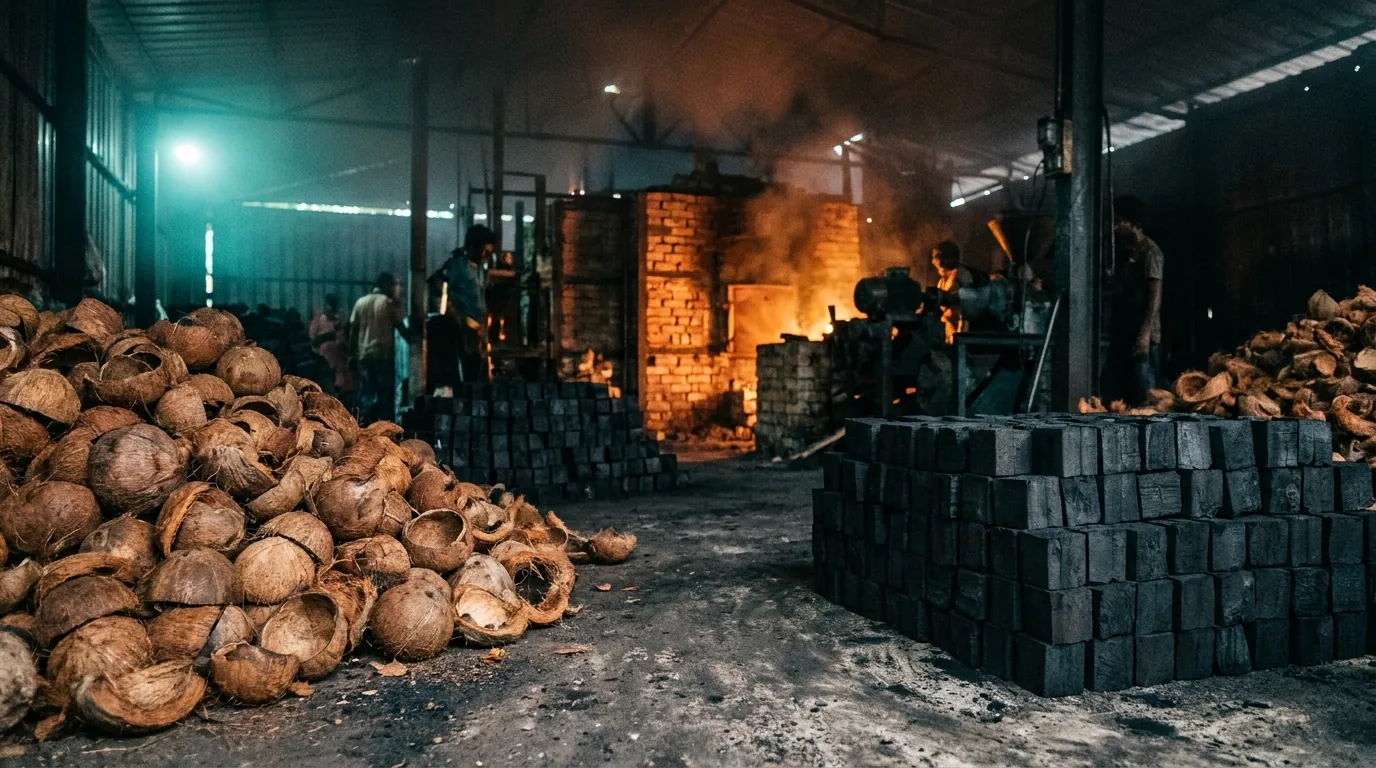
A finished charcoal cube looks simple, but the quality you buy is decided long before it reaches the box. Each step in the process leaves its mark on ash content, density and burn time. Here is how a coconut shell becomes a cube you can sell.
The raw material
It starts with coconut shell, an agricultural by-product left over after the meat and water are used. Using a waste stream keeps the material 100% natural and avoids the deforestation problems of wood charcoal. The shell is sorted and cleaned, because contamination at this stage carries through to the final ash figure.
Carbonisation into char
The cleaned shells are carbonised — heated with limited oxygen so they turn to char rather than burning away. Controlled carbonisation is what fixes the carbon content and keeps mineral residue low. Done well, this is the foundation of the consistent 1.8–2.0% ash that defines premium charcoal; done poorly, no later step can fully recover it.
Grinding to fine powder
The char is ground into a fine, uniform powder. Particle size matters: an even, fine grind presses into a denser, more homogeneous cube, which translates directly into longer, steadier burn time and fewer weak spots that crack or crumble.
Mixing with a natural binder
The powder is mixed with a natural binder and water — no chemical additives and no synthetic binders. The binder holds the cube together without contaminating the burn or adding odour. The ratio is controlled carefully, because too much binder raises ash and affects taste, while too little produces cubes that fail the drop test.
Pressing and cutting
The mixture is pressed under high pressure into briquettes, then cut into cubes of roughly 20–30mm. Pressure determines density, and density determines how long a cube holds heat. Consistent pressing is why cubes from the same batch ignite and burn alike — important when a lounge or brand needs predictable sessions.
Drying to low moisture
The cut cubes are dried down to around 5% moisture. Moisture is the enemy of clean ignition: damp cubes are slow to light, spit, and burn unevenly. Proper drying gives the ~9 minute ignition and clean 2h+ burn that buyers expect.
Quality control and lab testing
Every stage feeds into final quality control. Under ISO 9001 procedures and independent lab testing, each batch is checked for ash content, burn time and a drop test (target 0/10 breakages). This is the point where the process either confirms the 1.8–2.0% ash specification or sends material back. You can see the full sequence — from shell to finished cube — in the factory video on our site.