
Is Coconut Charcoal Sustainable? The Eco Case for Shell Charcoal
Coconut shell charcoal is made from an agricultural by-product, with no tree felling and no chemical additives. The sustainability case — and what buyers should verify.
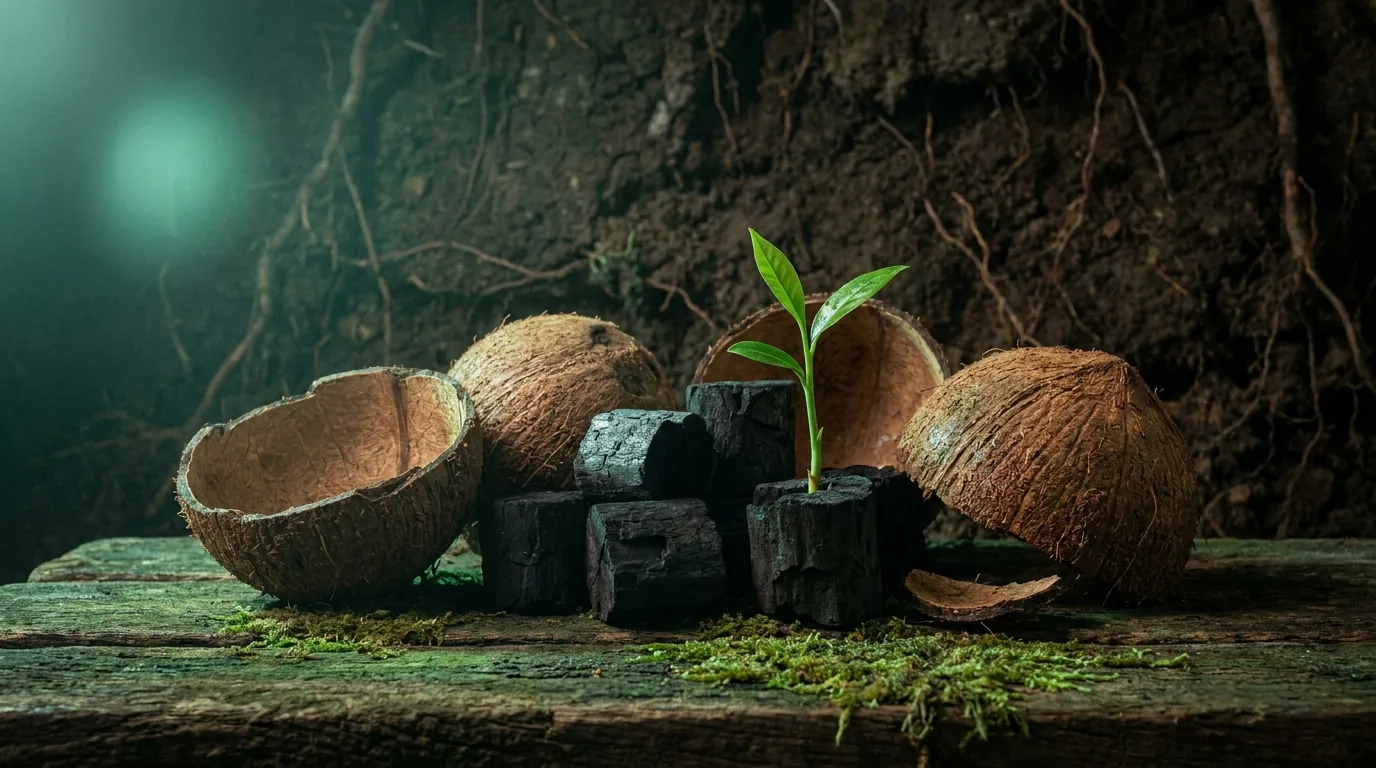
Sustainability has moved from a nice-to-have to a purchasing question, especially among European buyers. Coconut shell charcoal has a genuinely strong eco case — but the claim only holds if the supplier can back it up.
A by-product, not a felled tree
The strongest point is also the simplest. Coconut shells are waste from the food and oil industry. The flesh and water are used; the shell would otherwise be burned or dumped. Turning that shell into charcoal puts an agricultural by-product to use and involves no tree felling at all. That stands in sharp contrast to traditional wood or lump charcoal, which is often tied to deforestation and habitat loss.
100% natural, no chemical binders
Quality coconut charcoal is pressed from carbonised shell and nothing else. There are no chemical binders, no accelerants and no additives. That matters environmentally because nothing synthetic enters the product or the waste stream, and it matters for the end user because the burn stays clean. Our cubes are 100% natural coconut shell with no chemical additives.
A clean, low-ash burn
Sustainability is not only about sourcing; it is also about how the product performs in use. A low-ash, clean-burning charcoal means less residue, less waste per session and a longer burn from the same material. On our charcoal the ash content runs a consistent 1.8–2.0%, with natural white ash and a burn time of two hours or more. More heat from less material is, in plain terms, more efficient.
What an eco claim should be backed by
This is where buyers should be sceptical. “Eco-friendly” on a box means nothing on its own. Ask for three things. First, origin — where the shell comes from and confirmation that it is a by-product. Second, a clear statement of no chemical additives or binders. Third, independent lab testing of composition and ash, not just a self-printed datasheet. We can supply ISO 9001 documentation and independent lab results from bodies such as Beckjorindo or Carsurin.
Why EU buyers increasingly ask
European distributors and brands face growing pressure from regulation and from their own customers to document what they sell. Being able to show that a product is a by-product, additive-free and lab-tested is becoming part of the basic commercial conversation, not an afterthought. A supplier who can answer those questions in writing makes your own compliance and marketing far easier.
Honest, not greenwashed
It is worth being precise rather than sweeping. Coconut shell charcoal is not carbon-neutral, and shipping a container across the world has a footprint. The honest claim is narrower and more defensible: the raw material is a by-product that would otherwise be wasted, the product contains no chemical additives, and the composition is independently verified. That is a case you can stand behind with your own customers.