
Coconut Charcoal Storage and Shelf Life: Keeping Cubes Dry
Coconut charcoal doesn't expire, but moisture ruins it. How to store cubes, what humidity does to performance, and how long briquettes stay at their best.
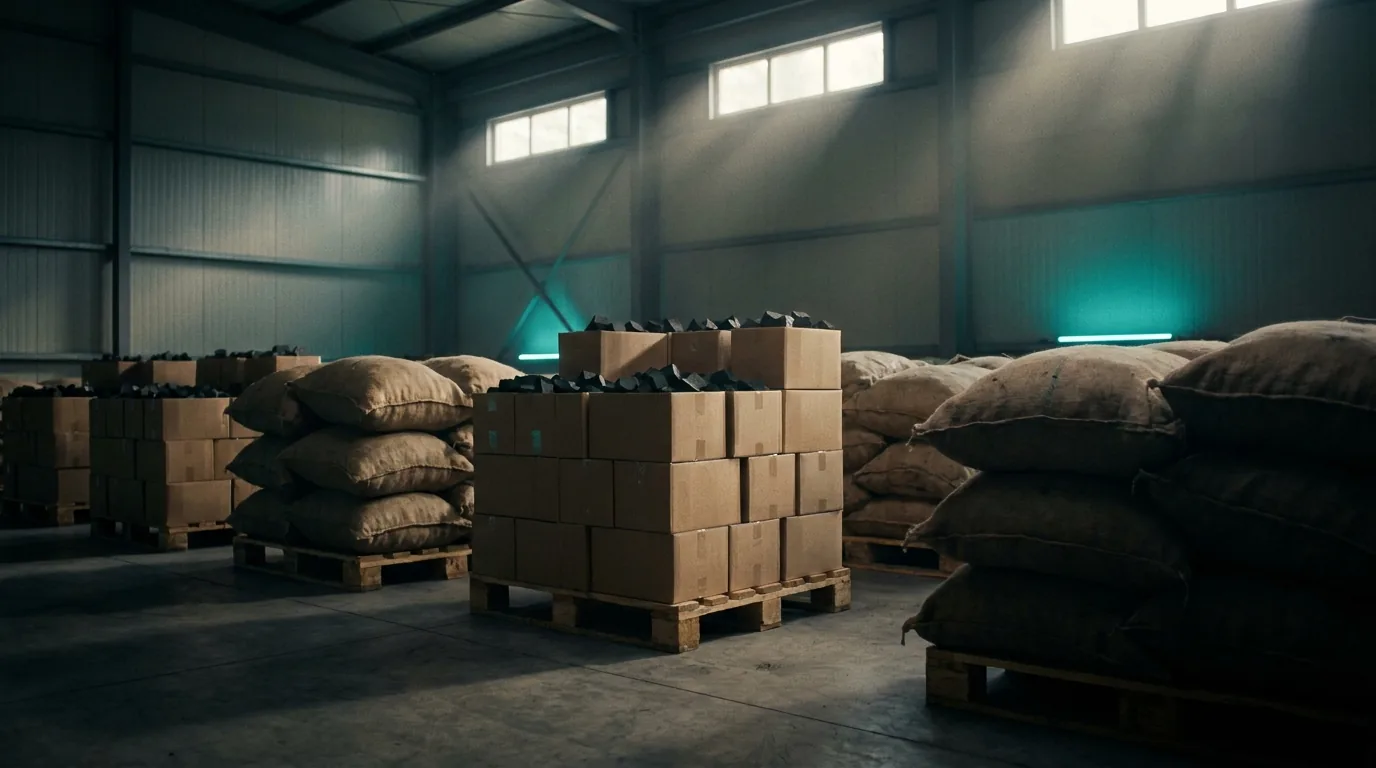
Coconut charcoal does not spoil the way food does. Stored correctly, a cube made this year will light and burn just as well next year. The real enemy is not time but moisture, and almost every storage problem traces back to it.
No True Expiry When Stored Correctly
Coconut-shell charcoal is a stable, carbonised product. It has no organic content that decays, so there is no hard expiry date. A sealed box kept dry can sit on a shelf for a long time without losing its core properties. What changes over time is not the carbon itself but the conditions around it, which is why storage matters far more than the calendar.
Target Moisture ~5% and Why It Matters
Our cubes leave the factory at roughly 5% moisture. That figure is deliberate. It is low enough for a clean, fast ignition and a long, steady burn, while keeping the cube solid rather than brittle. Moisture above that level is the single biggest cause of poor performance in the field. Keeping a box near its original 5% is the whole goal of good storage.
What Humidity Does
When charcoal absorbs water from the air, several things go wrong at once. Cubes become hard to light and take longer than the usual ~9 minutes to reach full heat. The burn produces more ash than the expected 1.8–2.0%, and burn time can fall below the 2h+ you should get. Damp cubes crumble and break in the box, creating dust and waste. Absorbed water also adds weight, so a customer effectively pays for water instead of charcoal. None of this is a quality fault in the product; it is the result of storage conditions.
How to Store It
The rules are simple and they all point in the same direction: keep water out.
- Keep cubes dry, in a covered, weatherproof space with stable humidity.
- Keep boxes sealed until use; reseal opened packaging to slow moisture pickup.
- Store off the floor on pallets, away from external walls where condensation forms.
- Avoid temperature swings, which drive condensation inside boxes as warm and cold air cycle.
- Keep the product away from direct water sources, washdown areas and damp corners.
These steps cost almost nothing and protect the full value of every container you hold.
Recommended Use Within 1–2 Years
For peak performance, we recommend using the charcoal within one to two years. This is not an expiry date but a practical window. Within it, even well-stored stock stays at its best for ignition, burn time and ash. Rotating stock on a first-in, first-out basis keeps your inventory inside that window and ensures the oldest boxes always ship first.
Warehouse Tips for Distributors
If you hold stock for resale, a few habits protect both performance and margin. Date your pallets on arrival and rotate strictly first-in, first-out. Keep a simple log of warehouse humidity, especially through seasonal changes. Store full FCL deliveries away from loading-dock doors, where outside air and damp enter most often. Inspect a box from each batch periodically so you catch any moisture issue early rather than at the customer. Treated as a dry good and rotated sensibly, coconut charcoal holds its quality from our factory all the way to the lounge.