
Coconut Charcoal Ash Content Explained: Why 1.8–2% Matters
What "ash content" really means for hookah charcoal, why a lower number is better, and what percentage to look for when buying coconut charcoal wholesale.
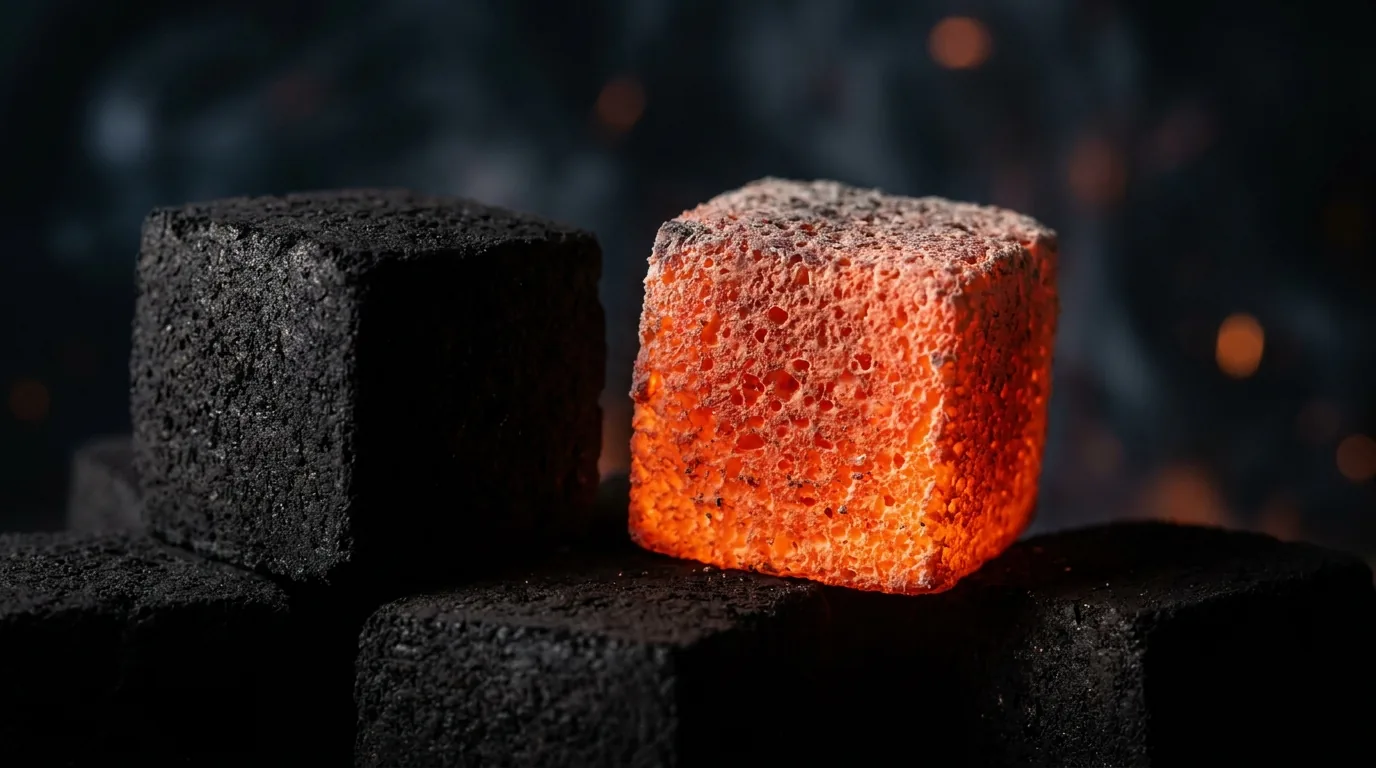
“Low ash” appears on every box of coconut charcoal. Few buyers can say what the figure actually means, or where the line between good and mediocre sits.
We are IZZY COCO — our coconut charcoal is made at our own ISO 9001:2015 factory in Tangerang, Indonesia, and every batch is tested by an independent laboratory (Beckjorindo or Carsurin) to 1.8–2.0% ash. The numbers in this article come from those lab reports, not from a label, and you can request a sample to check them yourself.
That is a problem, because when you buy in bulk, ash drives more end-user complaints than anything else on the spec sheet. So here is the explanation in plain terms.
What ash content actually is
When a cube burns, most of it converts into heat and gas. What remains is a small amount of mineral residue — the ash. “Ash content” is simply how much of the cube’s weight ends up as that residue. A 2% figure means roughly 2% of the cube returns as ash, while the rest served as fuel.
Why a lower figure is better
Less ash shows up in several ways your customers notice immediately. The session stays cleaner, with less grey residue dropping into the bowl and onto the tray. The heat runs longer and more steadily, because more of the cube is fuel and less is inert material. And for a lounge cleaning dozens of bowls a night, low-ash charcoal simply means less work.
There is also a question of perception. Experienced smokers can identify high-ash charcoal within a single session, and once charcoal is perceived as low-grade, it becomes difficult to command a premium for it.
What counts as a good number?
| Ash content | What it means |
|---|---|
| 1.8–2.0% | Premium — what serious brands and lounges buy |
| 2.0–2.5% | Acceptable mid-market |
| 2.5% and above | Budget — expect complaints |
If a supplier quotes 1.8–2.0% and can substantiate it, you are looking at premium-grade charcoal. That is the band to ask for.
Always ask for the lab report
Ash content is measured in a laboratory: a sample is burned to constant weight in a muffle furnace and the residue is weighed. Reputable producers test ash alongside moisture, fixed carbon, burn time and a drop test for durability at an independent lab such as Beckjorindo or Carsurin, and they will share the Certificate of Analysis. The key word is tested. A genuine figure on a real lab document is worth far more than “typically around 2%” in an email. If a supplier cannot show the number, it is safest to assume the worst.
Ash is not the only factor
It is the headline figure, but several others shape performance. Density matters — a heavier cube burns longer; with fixed carbon of about 80% a premium 25 mm cube holds heat for 120 minutes. Moisture should be low — about 5% at packing. And shape consistency keeps the cubes heating evenly. Origin contributes here as well: Indonesian coconut shell is dense and clean-burning, which is why most premium shisha charcoal originates there.
In summary
When a supplier can show you a recent lab report at 1.8–2.0% ash, consistent from batch to batch, you have found premium-grade charcoal. When they cannot show the figure at all, keep that in mind before committing a container to it.